
Day 4: Salt Pork (or Love as Preservation)
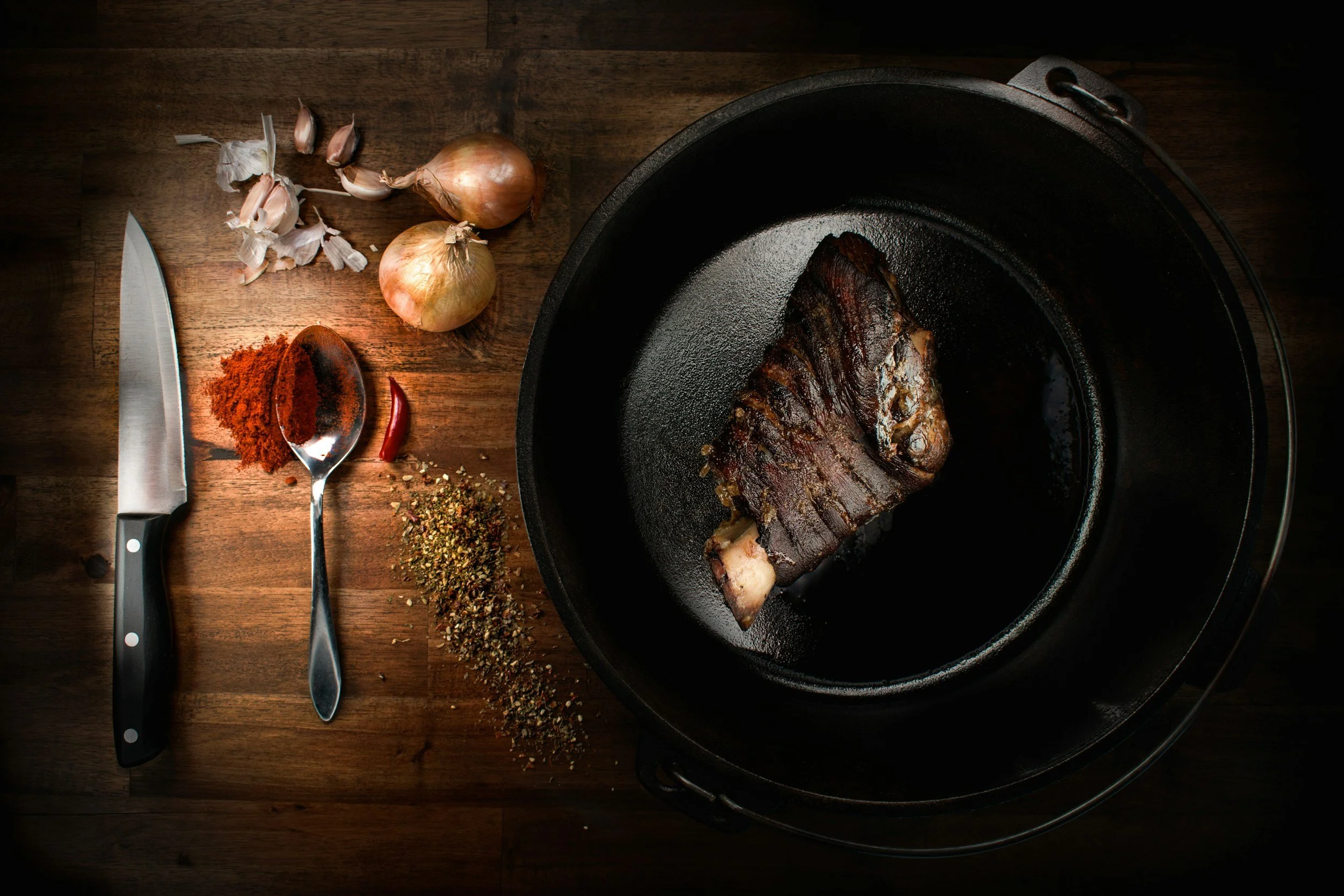
smoked ham hock
Before refrigeration, there was smoke. Before abundance, there was salt.
Long before cold storage and grocery aisles lined with shrink-wrapped cuts, preservation was the difference between sustenance and hunger. Salt drew moisture from meat and slowed decay. Smoke sealed, flavored, and protected. These were not culinary flourishes. They were technologies. They were planning. They were survival measured in weeks and months instead of hours.
In the American South, preservation became essential for people who had very little margin for waste. Enslaved Africans were often allotted the least desirable portions of the animal — the hocks, the jowls, the feet, the scraps. What they had was rarely generous. What they did have had to last. Salting and smoking were ways of extending what little there was, stretching flavor across pots of beans and greens, ensuring that nourishment did not disappear overnight.
Salt pork and smoked meat were never meant to stand alone on a plate. They were anchors dropped into something larger. A ham hock tucked into collards. A piece of salt pork simmering with black-eyed peas. A smoked turkey neck deepening a pot of beans. The meat itself might never be the point. Sometimes it dissolved into the broth entirely, leaving behind only depth. Sometimes it surfaced, softened and yielding, but even then its purpose had already been fulfilled. It had done its work.
As a girl born and raised in Brooklyn, this tradition always felt slightly distant from me. I did not grow up watching someone lay out whole smoked hocks on a cutting board. I never saw salt pork served plainly on a plate. It floated in the pot, submerged and invisible. Slightly mysterious to my more urban repertoire. There is a part of me that still feels a quiet inadequacy around it, as though I am arriving late to a conversation everyone else already understands.
Do people eat them whole? I’m not even sure. What I know is that I appreciate what they bring. The way a small, salted fragment can transform an entire pot. The way smoke lingers in greens or beans long after the meat itself has softened beyond recognition.
It reminds me of the rind of prosciutto in my husband’s kitchen. The heel he tucks into a sauce or braise, not for show but for depth. It disappears slowly, leaving behind savoriness and umami. It performs the same kind of quiet labor. Southern salt pork and Italian prosciutto rind share a logic: nothing wasted. Flavor extracted fully. The future considered in the present moment.
Preservation is love that plans ahead, unannounced. It looks like someone quietly dropping a small piece of smoked hock into a pot without ceremony. It smells like greens softening on the stove. It tastes like beans that satiate more than the ingredients alone would suggest.
Salt pork teaches us that care is often invisible. It dissolves. It seasons. It disappears so something else can be sustained. The generations of people who salted and smoked meat were not waxing poetic about devotion. They were making sure that dinner would be on the table tomorrow. They were stretching what they had so that no one left it hungry.
This is love that plans. Love that protects. This is love as preservation.