
Day 3: Greens (or Love as Restraint)
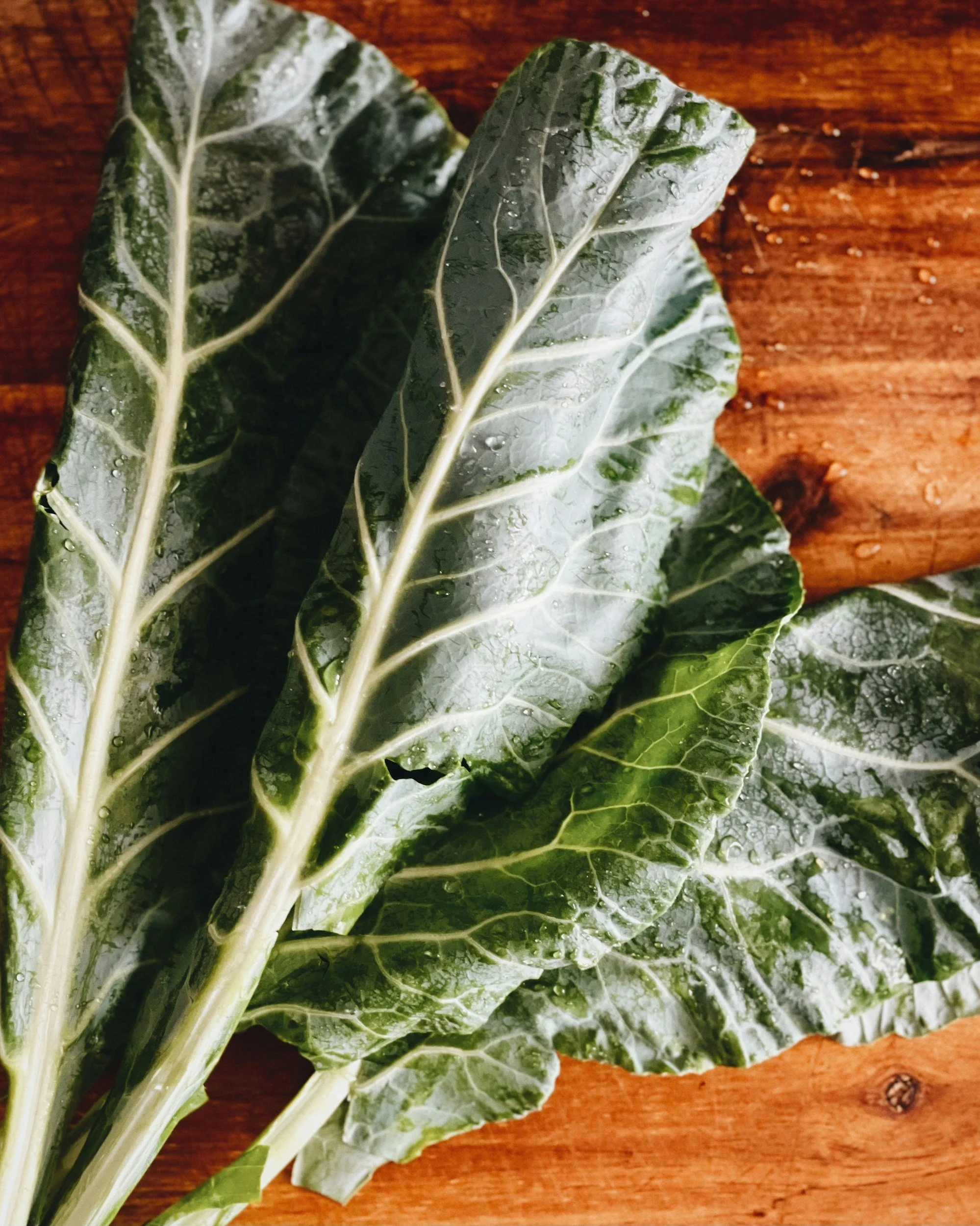
collard greens
Most people don’t crave greens the way they crave fried chicken, but no Black table is truly set without them.
Greens are never, ever rushed. They demand time, and so they are often the first thing prepared on any given Sunday. The preparation is long—soaking, sorting, stacking, slicing into thick chiffonades. A steady procession of hands and water and knife. Then, into the pot. A low simmer for hours, almost to the point of dissolving.
They are worth the wait. Because raw, their tough and bitter leaves resist you. But cooked low and long, they soften. They surrender. What begins as sharp becomes something steady. An elixir. A salve. A fortifying and comforting part of the soul food repertoire.
Historically, greens were necessity. Collards, mustards and turnips were vegetables that could grow in poor soil and feed many. They trace back to African leafy greens and agricultural knowledge carried across the Atlantic. On American soil, they adapted again. This time, seasoned with smoked meat like ham hocks or salt pork or turkey neck, they became layered and rich, their bitterness transformed.
And then there is the potlikker. What gathers at the bottom of the pot after hours of simmering. This is the dark, mineral-rich broth steeped with greens and smoke and salt that is never discarded. It is coveted. It is lifted carefully with a spoon. Poured into small bowls. Sopped up with cornbread. Savored. For some, it is like a closing course after the main event. For others, it is a morning salve. It steadies the belly. It restores balance. It is the oldest kind of medicine.
Greens are connection, too. They evoke memories of my grandmother’s plates after long church services. Greens spooned carefully beside fried chicken and macaroni and cheese, their dark sheen almost reflective. And connect to her mother before her, who lived a more agrarian life and may well have grown and pulled them from the ground herself. And to her ancestors before her, who likely did the same under duress, tending fields they did not own, perhaps without the luxury of savoring their rich viscousness.
Greens are labor and they are lineage. Today, I stand at my own stove, stirring my own pot, loving them and craving them so much sometimes that my Italian husband has taken them on as a way to please me. He washes the grit from each leaf. He strips the stems. He stacks and slices. He seasons carefully. He stirs and checks and adjusts. He lets them go longer than he thinks they need. And he has learned their language. He knows that the work of tending them cannot be rushed.
This is love as restraint.