
Day 5: Okra (or Love as Invention)
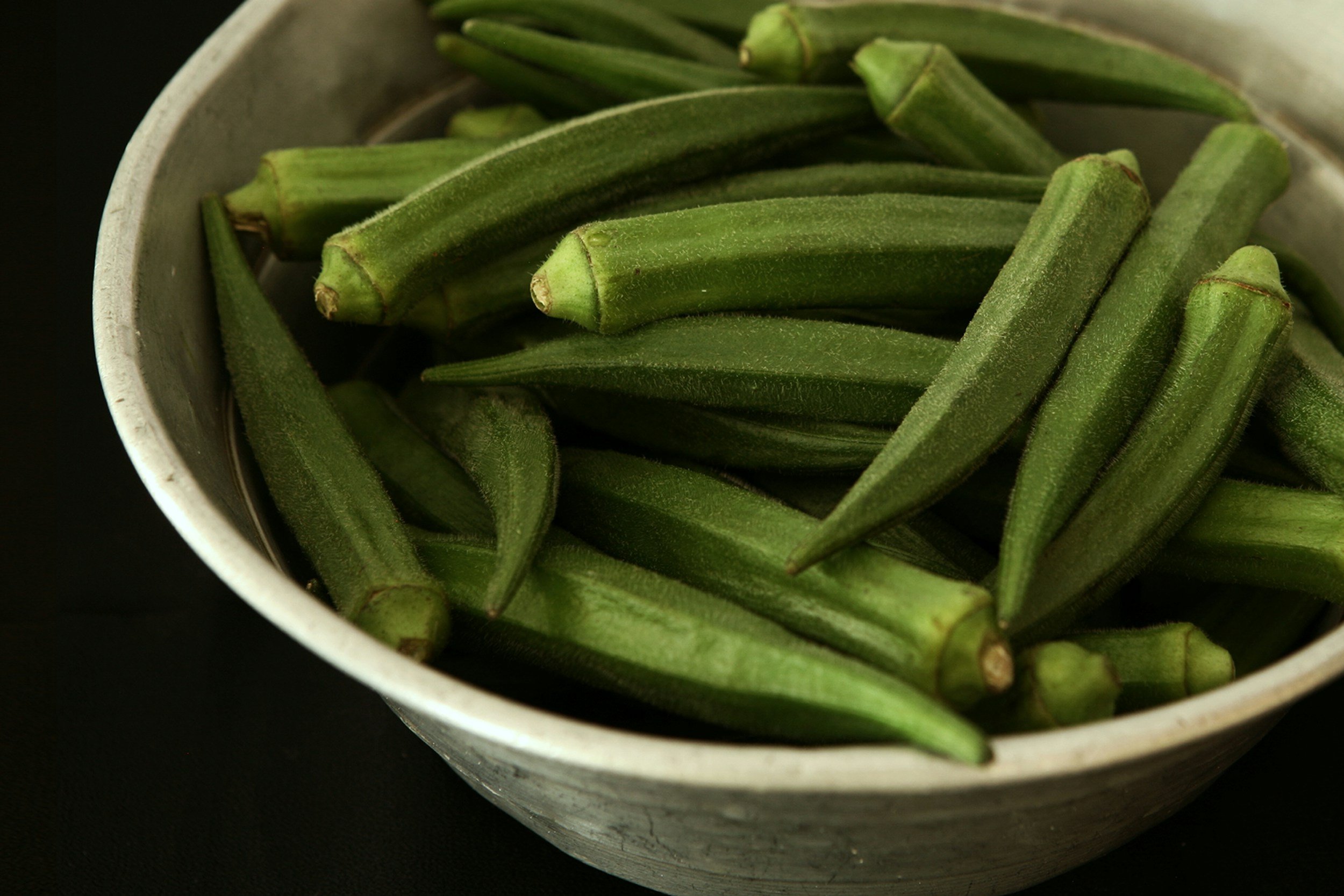
okra in a bowl
There are foods we inherit without question. And there are foods that test us. At a time when conversations about identity feel sharpened and when everyone seems to be defining what counts and what doesn’t, I find myself staring at a small, green pod and asking an uncomfortable question: What does it mean to belong to a food you do not love?
Okra is controversial. I hate it. For me, it is the slime. The way it slicks the knife when you slice into it. The pale seeds suspended inside, clustered like fruit in an aspic mold. The faint vegetal smell that lingers on your fingers. The way it thickens and clings. And yes, it is the glue that holds together one of my favorite dishes, gumbo, but that is about the only exception I can make. Otherwise, okra leaves me uneasy and low key disgusted.
And yet. Okra is not optional in Black food history. Native to West Africa, okra traveled across the Atlantic in the holds of slave ships, carried in memory and in seed. It adapted to Southern soil and became foundational in Creole and Lowcountry cooking. In some West African languages, the word gumbo literally means okra. It thickened stews naturally, without flour or cream. It stretched broths into meals. It solved a problem. In kitchens with limited resources, that mattered. Okra is invention made edible. It binds what would otherwise separate. It gives body where there is only liquid. It makes cohesion out of fragments — meat, shellfish, rice, spice. Gumbo without okra is still stew. With okra, it becomes something else entirely. That transformation is not accidental. It is ingenuity.
So what do I do with my resistance? As a girl raised in Brooklyn, my distance from Southern foodways already leave me feeling slightly outside the frame of what a “real” Black table looks like. Okra only sharpens that feeling. Like chitterlings, it seems to represent a threshold I cannot not cross. I wish I could get it. I wish I could crave it. Instead, I recoil. But heritage is not a popularity contest. Part of loving a tradition is acknowledging what sustained it, even if it does not seduce you personally. Generations before me cultivated, cooked, and celebrated this vegetable because it mattered. Because it worked. Because it nourished and stretched and transformed.
Okra’s very quality that repels me, its viscosity, is the reason it endured. That slickness is chemistry. That cling is cohesion. It thickens without added cost. It turns scraps and broth into something substantial. It is a vegetable that invents structure where there is none.
This is love as invention. Love that finds a way. Love that adapts across oceans. Invention is not always glamorous. It is often practical. It is often born from constraint. It takes what is available and reshapes it into something sustaining. Okra did that in West Africa. It did that in the American South. It continues to do that in kitchens where gumbo still simmers and families still gather. Even if I never come to adore the pod itself, I can respect the brilliance of what it makes possible.