Who Columbus Day Was Really For (Or, How You Find Out it Began as an Answer to a Massacre.)
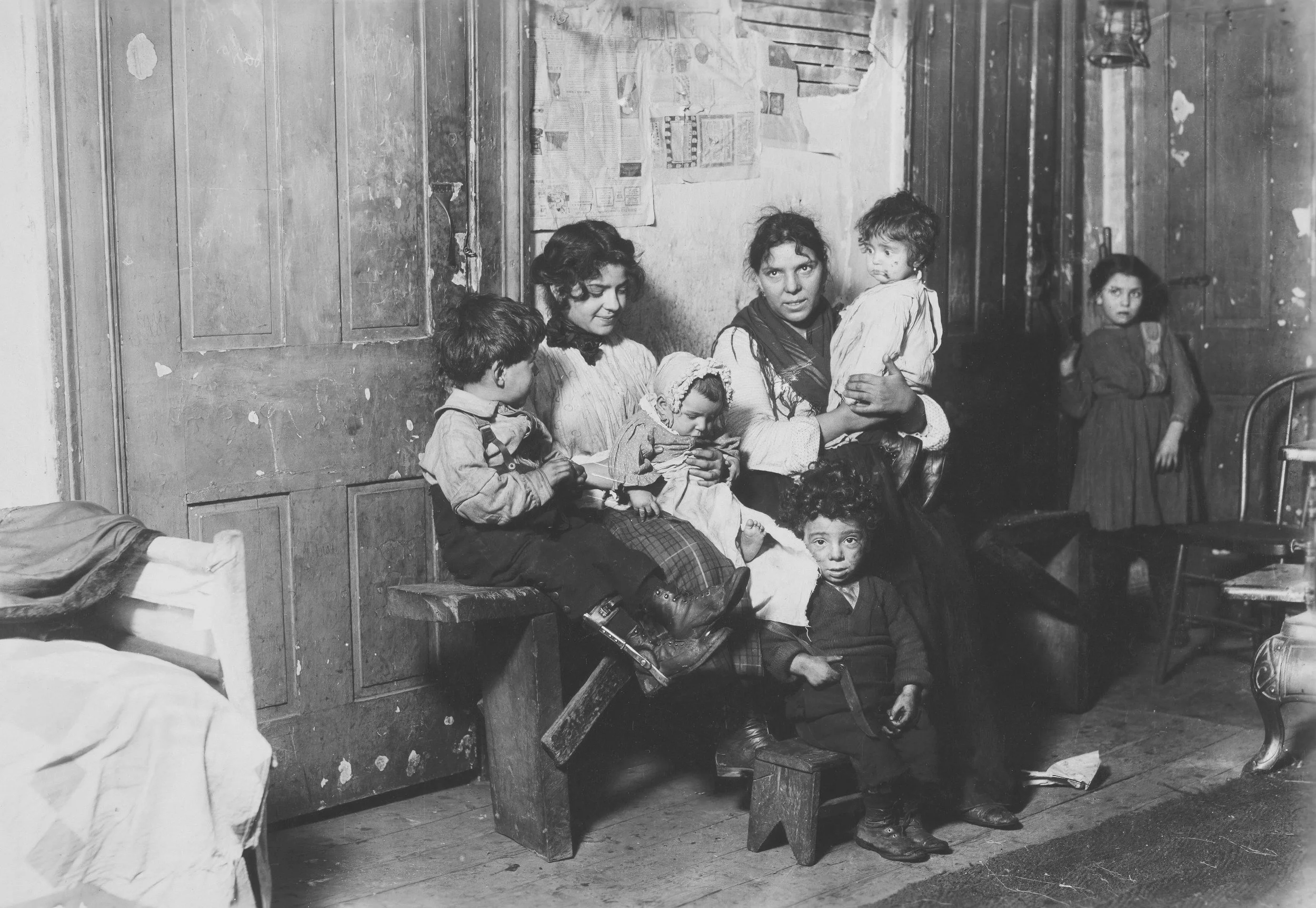
In March of 1891, a mob in New Orleans lynched eleven Italian immigrants.
The trouble started the previous October, when a police chief named David Hennessy was shot near his home. He died the next day. Reportedly in his last words he blamed Italians, and the newspapers took it from there. They announced that a Sicilian secret society had done it. Police arrested hundreds of Italian men and nineteen were indicted. The mayor called the city's Italians "the worst classes of Europe."
The trial ended with acquittals and mistrials. But the next morning thousands of citizens, led by prominent men of the city, marched on the Orleans Parish Prison. The police stood back and did nothing. The mob pulled eleven men out of their cells and killed them. Historians say most had been arrested simply because they were Italian.
This was the largest mass lynching in the United States. Much of the press shrugged or approved. The New York Times observed that every good citizen would call it deplorable, though hardly anyone would confess to deploring it very much in private. Theodore Roosevelt, then a federal civil service commissioner, wrote to his sister that he thought it "a rather good thing." Italy cut off diplomatic relations and recalled its ambassador. Louisiana prosecuted no one. President Harrison, silent for months, finally called out the killings in his December address to Congress, and the United States agreed to pay an indemnity to the families of three victims who were Italian citizens.
Politically, Harrison looked for ways to counter the dangerous and discriminatory climate against Italians and their culture. He wanted to support their inclusion, and he needed their votes. Columbus was a name that everyone knew. So, the next year, he established the first National Columbus Day, a one-time celebration on October 21, 1892, the 400th anniversary of Columbus’ voyage. Italian flags flew beside American ones in cities across the country. The day became permanent in 1934, after the Knights of Columbus lobbied Congress, and a federal Monday holiday in 1971.
In hindsight, Harrison clearly hung his hat on the wrong man.
Columbus was a Genoese sailor working for the Spanish crown. He never set foot in what is now the United States. As governor of Hispaniola he demanded a quota of gold from every Taíno person over fourteen who lived near the mines and twenty-five pounds of cotton from everyone else. He enslaved Taíno and shipped hundreds to Spain to be sold. Complaints about his brutality piled up. By 1500 Columbus was arrested by his own men and sent him home in chains. Within a few decades, disease and forced labor devastated the island's Taíno population.
Italy marks October 12 with a national Columbus Day, created in 2004, but nobody gets the day off and many Italians let it pass. Genoa, his hometown, holds a ceremony at his family house and a costumed parade.
But the modern day movement to rename this holiday Indigenous Peoples' Day, focusing instead on the people who suffered at Columbus's hands, may ironically be a similar, politically driven over-correction that is motivated by the outrageous crimes committed against a people instead of the achievements of a culture.
I can speak to this. My ancestors are of the Lenape tribe. My grandmother was from Belmar, on the Jersey Shore, and I grew up in Brooklyn. Both sit inside the Lenape homeland, Lenapehoking. As an indigenous person, I feel suffocated by a day that sometimes centers more on the indignities initiated and suffered at the hand of this man than on the rich cultural legacy at the foundation of this country's history.
In this way, we have something in common with our Italian-American brothers and sisters. We both have, in varying degrees, been forced to squeeze and dumb down our rich and colorful cultures into pale, politically tinged and easily digestible snippets as compensation for atrocity.
A day that centers our achievements and accomplishments, the foundation we have laid for this country, would be so much better. My tribe named Manahattan. Broadway follows the trail they used to walk up and down our island over centuries. And our continent carries the name of a Florentine, Amerigo Vespucci. Our names are already on the map. A holiday could start by reading them aloud.