
Day 2: Cornbread (or Love as Grounding)
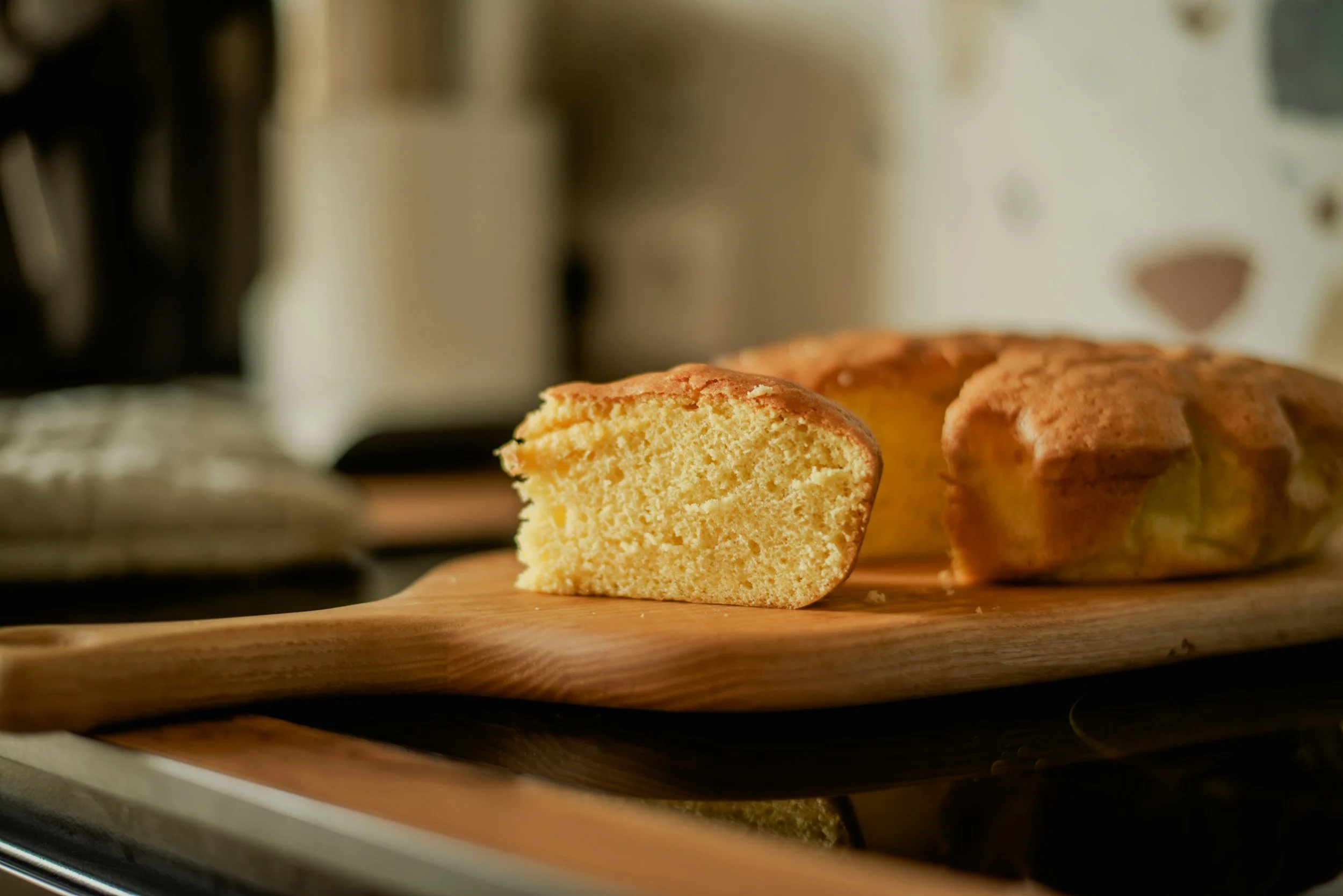
cornbread cooling on a stovetop
Cornbread is never the star. It is not the reason you come to the table. Its job is to elevate and balance what is already there. It adds texture and color, but for me, it mostly offers a place to rest the palate. A quiet pause between savory and spicy bites.
Made from cornmeal, cornbread carries deep roots. Long before it appeared on American tables as “bread,” corn was cultivated, ground, and cooked by my ancestors, the Indigenous peoples of this land. One of the Three Sisters, corn in its many forms was sustenance. Portable. Adaptable. Filling. It was food built for survival and continuity.
When my other people, enslaved Africans, were forced onto this land, corn was one of the few ingredients consistently available to them. Inexpensive and abundant, it could feed many. Cornbread as we know it emerged at the intersection of Indigenous knowledge, African ingenuity, and brutal necessity. It lived on enslaved people’s tables, and sometimes on enslavers’ tables too, though rarely in the same way. For one, it could be an accompaniment or novelty. For the other, it was survival.
That dual history still lingers. Cornbread is humble, but it is not simple.
Today, in Black foodways, cornbread does more than fill space. It catches. It absorbs. It tempers. It balances. On a celebration plate of fried chicken, collard greens, mac and cheese, candied yams and baked ham, cornbread does essential work. It gives your palate somewhere to land between salt and fat and sweet. It holds the meal together without asking for applause.
Growing up, cornbread was always at the table. Boxed Jiffy was the default, homogenous and pale, uncomplicated and still preferred by busy Boomers like my mom. But in my house now, we make it from scratch. Simple, but made with the best organic cornmeal we can find. The texture is more nuanced. The color, deeper, a rainbow of richer yellows. Once, I made a summer version and folded fresh, peak-season corn into the batter. It was a revelation. Pops of sweetness studded the crumb and lifted the whole experience into something bright and unexpected.
When preparing cornbread for a feast, it isn’t exactly an afterthought. It just comes last. The collards need time. The fried chicken needs focus. The ham and the mac and cheese and candied yams are all labor intensive. The cornbread? Twenty minutes, tops. It fits itself neatly in to the margins of meal prep.
And yet, the next morning, it becomes something else. When you wake up with a food hang over, and sit in the quiet aftermath of a morning that follows a big gathering, a thin slice of leftover cornbread with a cup of coffee can ease you back into your body and usher you solidly in to a new day.
And this is love as grounding. Love that steadies. Love that doesn’t compete, that doesn’t perform. Cornbread teaches us that sometimes loves doesn’t look like spectacle. Sometimes love is supportive, and subtle.